Getting started
What Age Should Kids Start Piano Lessons? A No-Fluff Guide
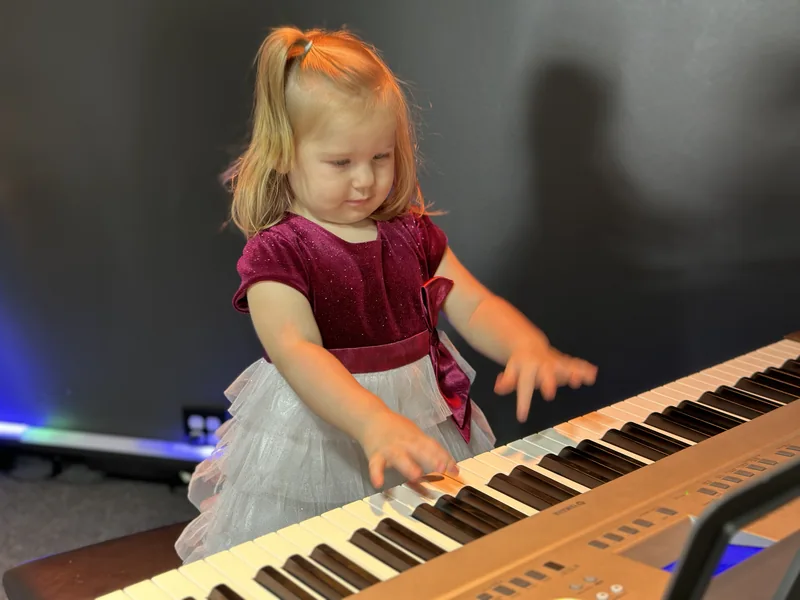
A practical look at interest, attention, home practice, and finding a piano lesson format that fits your child.

Updated
A good place to start
Readiness is a conversation with a teacher, not a birthday or a checklist to pass.
If you Google “best age to start piano lessons,” you’ll get a dozen different answers ranging from “birth” to “whenever they’re ready,” and none of them are particularly helpful when you’ve got a five-year-old banging on the kitchen table like it’s a Steinway.
We teach piano to kids at our studio in Friendswood. We’ve worked with younger beginners, older children, and adults. Here’s what we look for when a family asks whether their child is ready.
The Short Answer on the Best Age to Start Piano Lessons
Ages 5 to 7 can be a useful time to explore formal piano lessons. Readiness varies with the child, the teacher, the length of the lesson, and the support available at home. It is not a universal developmental cutoff.
A teacher can explore the child’s interest, comfort at the keyboard, and response to short activities, then suggest a useful lesson format.
But here’s the thing: that range is a guideline, not a rule. We’ve had four-year-olds who thrived and seven-year-olds who needed another year. The age on the birth certificate matters way less than the kid sitting on the bench.
What “Ready” Actually Looks Like
These observations can start a conversation with a teacher. They are not requirements a child must meet to try music.
- They can engage in a short activity. Reading a picture book, building something, or playing a simple game gives you clues. A teacher can break a lesson into much shorter activities; sitting still for 15–20 minutes is not a pass-or-fail test.
- They’re beginning to follow hand and movement directions. Knowing left from right can help, but it can also be learned with visual cues and repetition during lessons.
- They’re exploring counting and patterns. Steady counting can help with rhythm. Singing, clapping, and movement give a teacher other ways to introduce the same ideas.
- They can explore moving their fingers. Try gentle finger games together. This is a conversation with a teacher about comfort and adaptations, not a physical test a child has to pass before making music.
- They show interest. Curiosity about songs or the keyboard is a helpful starting point. Invite that interest without making an early preference a promise about future progress.
“My Kid Is Only 4 Are We Too Early?”
Maybe. Maybe not.
A younger child may do better with short activities, movement, and musical play than a lesson built around sitting at the piano the whole time. Ask the teacher how they adapt the lesson before deciding whether the format fits.
But here’s what CAN work at age four:
- Music exploration classes that focus on rhythm, singing, movement, and ear training
- Short, play-based piano introductions with a length and pace suited to the child
- At-home musical play — letting them press keys, make up songs, and develop a relationship with the instrument on their own terms
If your four-year-old is genuinely interested, talk to a piano teacher about what a lesson might look like for their age. At Best Lesson Ever! our piano teachers in the Friendswood area tailor every lesson to the individual kid. A lesson for a four-year-old looks nothing like a lesson for a ten-year-old, and it shouldn’t.
“My Kid Is 8 (or 10, or 12) Did We Miss the Window?”
No. Not even close.
There’s this myth floating around that if your kid doesn’t start piano by age 5, they’ve missed some critical window and they’ll never be as good. That’s not how it works.
An older beginner may find some parts of a lesson easier to manage: following instructions, noticing patterns, or practicing independently. That does not guarantee faster progress, but it is a good reason not to assume an eight-, ten-, or twelve-year-old has missed their chance.
The best age to start piano lessons is whenever your kid is motivated and ready. Full stop.
Some of the most talented students at our studio started in middle school. They didn’t miss anything — they just arrived at a different time and moved at a different pace.
What About the “Mozart Started at 3” Argument?
Yeah, Mozart also had a father who was a professional music teacher and composer who structured his entire childhood around music education in 18th-century Austria. Your kid has soccer practice and a Roblox account. Different circumstances.
Starting earlier does not automatically mean a better experience. Listening, singing, dancing, and clapping together are useful ways to explore music before formal lessons. A child can build familiarity with rhythm and sound without following a formal piano program.
How to Find the Best Age to Start Piano Lessons for YOUR Kid
Instead of asking “what’s the best age,” ask these questions:
- Is my kid asking about it? Curiosity is a useful signal.
- Can they engage with a short, structured activity? Think about a simple game, with breaks where needed.
- Are we ready? Plan a small, regular practice routine with the teacher. Ten or fifteen minutes may suit some beginners; others need shorter sessions.
- Do we have access to a keyboard or piano? Ask the teacher what suits the first stage of lessons before buying.
Bring the answers to a trial lesson. The teacher can help you decide what to try next, including a different format or more musical play at home.
Do I Need a Piano at Home?
You don’t necessarily need an acoustic piano. A teacher may be happy for a beginner to start on a touch-sensitive keyboard, while recommending an 88-key weighted digital piano for a closer piano feel as lessons develop. Touch sensitivity changes the sound when a key is pressed harder; weighted action is about the physical feel. They are different features. Confirm the number and size of keys, stand, seat, and pedal your teacher recommends, and compare current prices rather than relying on an old budget estimate.
The Bottom Line on Starting Piano
A useful starting point is interest, the ability to engage in a short activity, and a teacher willing to adapt to the child. Ages 5 to 7 are a common time for families to explore lessons, but earlier and later starts can both work. A trial is a chance to talk through the fit.
Don’t stress about a magic window. There isn’t one. The right time is when your kid is ready, and a good teacher will meet them exactly where they are.
Curious whether your kid is ready? Meet a piano teacher, try a short activity, and talk through a realistic home routine. If a different format or a little more time would help, that is useful feedback too.
Explore piano lessons in Friendswood.
What to discuss at a first piano lesson
Bring a song your child likes, describe any keyboard you have at home, and ask for one small activity to try during the week. Our teacher directory includes Christian Stran, who teaches piano and voice. Ask the team which teacher and time can fit your child.
For practical next steps, discuss your keyboard setup and a short home routine with the teacher. Our guide to readiness for music lessons can help you prepare that conversation. Practice Challenge gives families another way to explore beginner material and follow progress.