Choosing an instrument
Piano vs Guitar: Which Instrument Should Your Kid Learn First?
Piano or guitar? Compare comfort, musical interests, practice space, and the real costs of getting started.

Updated
A good place to start
Both can be a great first instrument. Their interest and a comfortable setup are useful places to start.
This is the debate that has launched a thousand Google searches by parents in minivans. Piano or guitar? Which one is “better” to start with? Which one gives your kid more of an advantage? Which one will they actually stick with?
We teach both at our studio in Friendswood, and we’ve watched kids start their musical journey on each instrument. Here’s the practical breakdown. We care less about which one your kid picks than whether they’re interested, comfortable, and having a good time.
The Quick Answer
There is no wrong choice. Both piano and guitar are fantastic first instruments. The best one for your kid depends on their personality, interests, and a few practical factors we’ll walk through below.
If you’re searching for “kids piano lessons near me” or “kids guitar lessons near me,” the fact that you’re looking at all is the important part. The specific instrument matters less than finding good teaching and an instrument your kid actually wants to play.
Now, let’s get into the details.
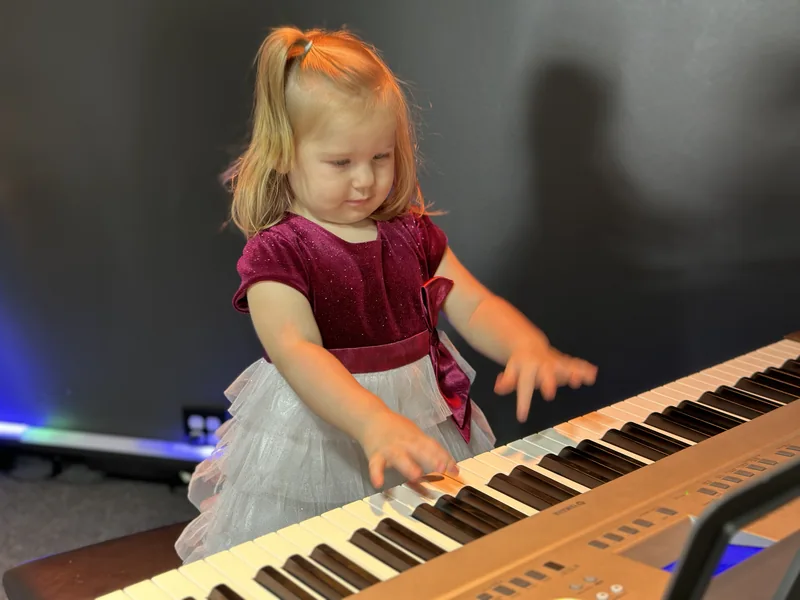
Piano: The Case For Starting Here
It’s Visually Logical
Piano is laid out in a straight line: low notes on the left, high notes on the right, with repeating patterns. That gives a beginner a visible way to explore scales, intervals, and chords. Guitar uses a different layout, with some notes available in more than one place. A teacher can help a child make sense of either.
Reading Music Comes Naturally
If you want your kid to learn to read sheet music, piano is the most straightforward path. The notes on the page map directly to keys. Press this key, get this sound. Clean feedback loop.
No Strings to Press Down
Piano doesn’t require pressing a string against a fret. That can make the first notes more comfortable for small hands. On either instrument, posture, fit, breaks, and technique matter. Guitar discomfort is a reason to check the setup with a teacher, not something a child needs to push through.
Two Hands, Two Parts
Piano gradually teaches kids to use both hands for different parts. That gives them a useful way to practice coordination and hear melody and accompaniment together. Guitar also develops two-hand coordination, with each hand doing a different job.
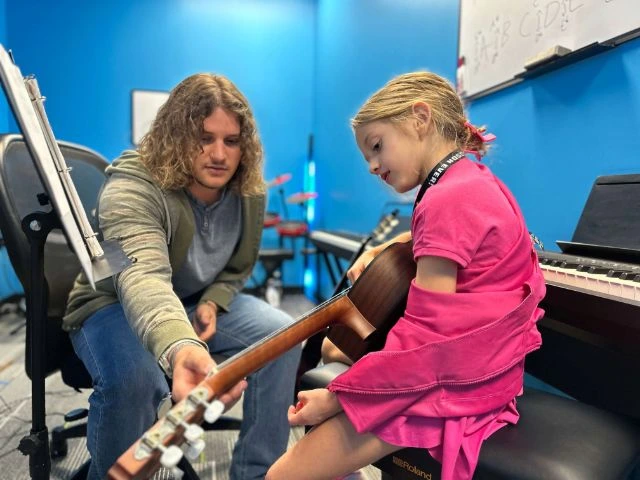
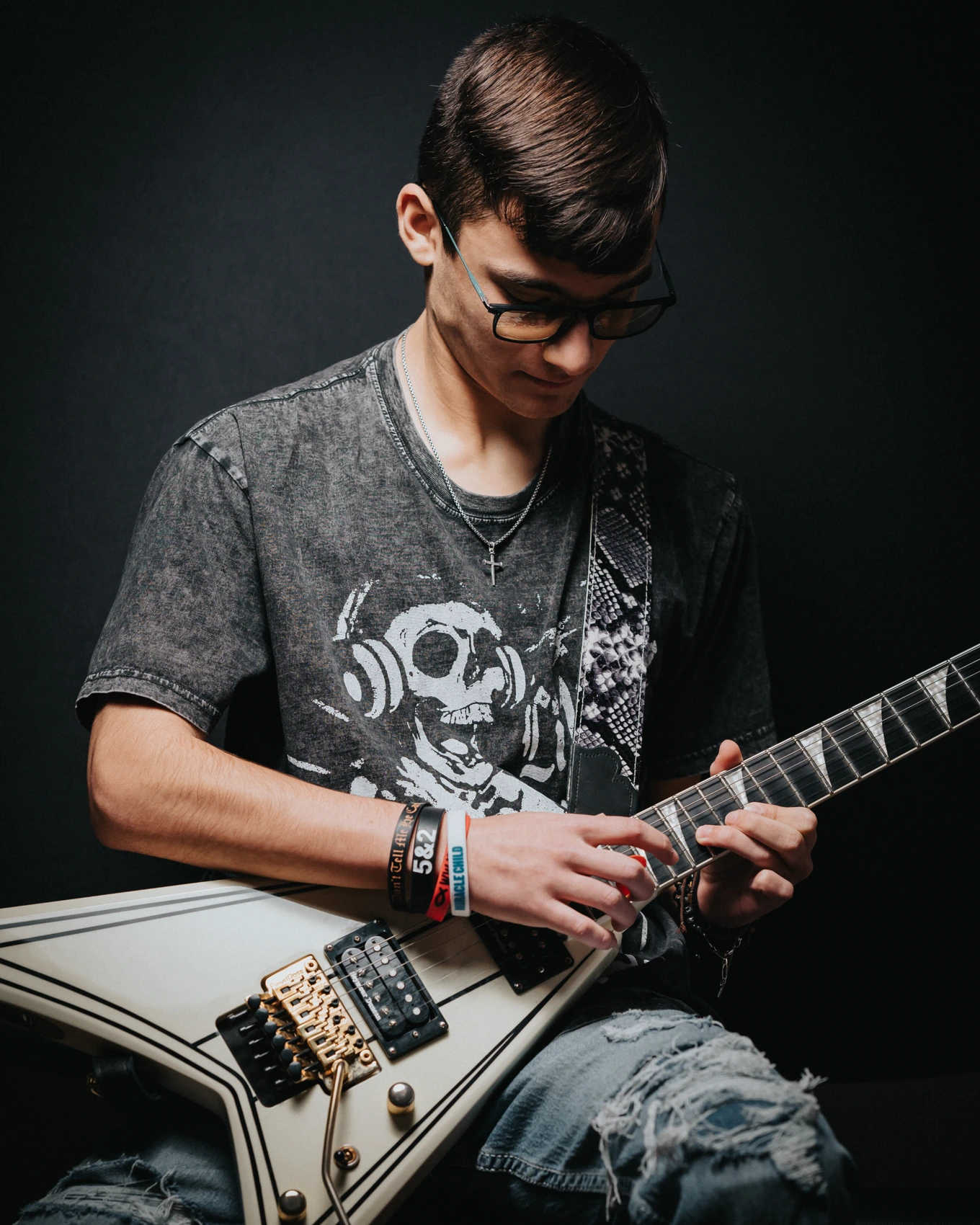
Guitar: The Case For Starting Here
It’s Portable and Social
You can take a guitar to a campfire, a friend’s house, a park. Guitar is inherently a social instrument, and for kids who thrive on hanging out and playing with friends, that matters.
Songs Come Fast
A kid can learn three or four guitar chords and suddenly play dozens of recognizable songs. That fast payoff is incredibly motivating. Guitar’s chord-based approach means your kid could be strumming along to real music within weeks.
It’s Cool
We’re just going to say it. For a lot of kids — especially pre-teens and teenagers — guitar has a cool factor that piano doesn’t. Is that a silly reason to pick an instrument? Maybe. Does it affect motivation and practice consistency? Absolutely.
Think About the Whole Setup
Compare the complete practice setup before buying. A guitar needs a tuner and case; an electric also needs a cable and an amp or headphone solution. A keyboard needs a stable stand and a seat at the right height. An 88-key digital piano with weighted keys is a different purchase from a compact beginner keyboard. Prices change, so ask the teacher what your child needs and compare current quotes.
The Head-to-Head Comparison
| Factor | Piano | Guitar |
|---|---|---|
| Starting point | Interest, comfort, and a teacher’s assessment | Interest, comfortable reach, and a suitable guitar |
| Physical demands | Pressing keys; posture and hand coordination | Fretting and strumming; setup and string choice affect comfort |
| Music reading | A clear visual layout for learning notation | Notation, chord charts, and tablature are useful options |
| Early wins | Simple melodies, at the student’s pace | Simple riffs and chords, at the student’s pace |
| Portability | Portable keyboards need a stand and power | Easy to carry; electric setups need extra gear |
| Practice volume | Headphones on compatible digital instruments | Headphones with a compatible amp or processor; strings still make some sound |
| Musical appeal | Melody, harmony, and accompaniment | Riffs, strumming, and a wide range of styles |
| Startup cost | Compare keyboard, stand, seat, and pedal costs | Compare guitar, setup, tuner, case, and amplification costs |
| Playing with others | Solo, accompaniment, bands, and ensembles | Solo, accompaniment, bands, and ensembles |
What About Your Kid’s Age?
Age is a real factor here, and it’s one of the top reasons parents searching for “kids piano lessons near me” end up choosing piano for younger children.
Ages 5–6: Piano can be a comfortable place to explore notes because the keys are easy to see and reach. A small guitar may work too, depending on the child and the instrument. These age bands are conversation starters, not admission rules.
Ages 7–9: Both instruments are worth trying. Look at how your child sits with the instrument, follows a short activity, and responds to the sound.
Ages 10+: Give your child a strong voice in the decision. Their musical taste and willingness to practice matter more than a general rule about which instrument comes first.
“Should My Kid Do Both?”
Eventually? Maybe. Starting with one instrument gives your child a simpler practice routine while they get used to lessons. After a few months, talk with the teacher about whether a second instrument would add something useful or spread practice time too thin. There is no single timetable that fits every student.
The Factor That Matters More Than Piano vs Guitar
Here it is: the quality of the teacher matters more than the instrument.
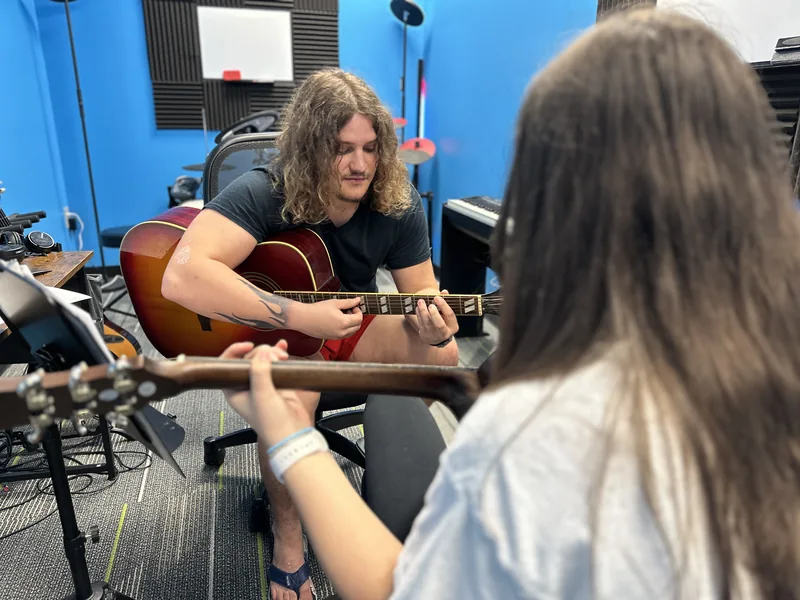
A great guitar teacher will give your kid a better musical experience than a mediocre piano teacher, and vice versa. The instrument is the vehicle; the teacher is the driver.
When you’re searching for kids piano lessons near me or guitar lessons in the Friendswood area, look for:
- Teachers who are working musicians, not just people who took a few college courses. Our teachers at Best Lesson Ever! play gigs, record music, and live this stuff. They bring that real-world experience into every lesson.
- Teachers who actually like teaching kids. You can tell the difference immediately. Some teachers tolerate kids. Some genuinely enjoy working with them. Find the second kind.
- A studio that offers performance opportunities. Playing in a bedroom and playing for an audience are different experiences. Ask how students can share their work and how the teacher helps them prepare. BLE offers performance opportunities; contact us for the current schedule.
What Our Teachers Would Tell You Over Coffee
If you cornered any of our piano or guitar teachers in Friendswood and asked them “piano or guitar first?”, they’d all say some version of the same thing: “Which one does your kid want to play? Do that one.”
Your kid’s enthusiasm is an important part of the decision. A comfortable instrument and a teacher who helps them enjoy the work can make practice easier to return to.
Let your kid experience an instrument with a teacher and pay attention to how they feel in the room. If they’re torn between piano and guitar, tell us when you ask about a trial so we can help you choose a useful first step.
Explore piano lessons in Friendswood. Explore guitar lessons in Friendswood.