Practice & motivation
Why Kids Quit Music Lessons
Brian shares his experience with music lessons, plus a practical plan for following a teacher’s assignment and bringing questions to the next lesson.

Updated
A good place to start
Start with the music they care about. Then make the next step small enough to see.
I quit music twice before I turned 20.
First chair saxophone in junior high. Practiced all summer. Recorded duets with myself from the Aladdin songbook. Then a band director made it miserable, and I walked. Regretted it for decades.
Years later I wanted voice lessons. Showed up wanting to sing “Feed Me Seymour” from Little Shop of Horrors. The teacher made me sing something else. I never went back.
That experience can happen when a student’s interests get lost in the lesson plan. A kid shows up with a song in their heart, gets handed something they don’t connect with, and loses the excitement that brought them in.
Best Lesson Ever! exists to help students keep that connection to music. No school can promise a child will never stop lessons, but we can pay attention to what makes them want to play.
What We Do Differently at Best Lesson Ever!
Repetition, method books, and recitals can all have a place in learning. The trouble starts when they become the whole experience: a student repeats the same exercise without knowing why, while a parent’s only window into progress is asking “how was it?” in the car.
We want students to make music they care about and families to understand what they’re working toward.
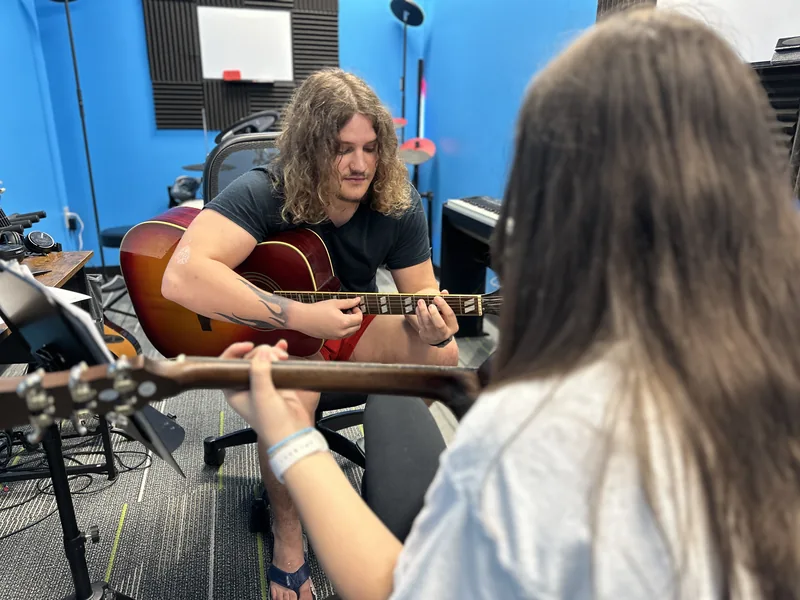
You play the song you came in with. If your kid walks in obsessed with a Taylor Swift song or a video game theme, that’s what we start with. Sound came first, then notation — that’s how music actually works. We teach the head slowly and the hands fast. Fun first, challenge later. You earn the right to push a student by first earning their love of music.
Progress students can see. Our original story described Level Up Lanyards as a way to celebrate milestones. Today, Practice Challenge gives families a way to follow progress between lessons: parents track progress and receive weekly teacher updates, while students earn practice credits and redeem them for Prize Wall rewards. Talk with your teacher about the milestones your child is working on.
Opportunities to share their music. Our Open Mic and showcase experiences give students a chance to practice performing, not just practicing alone. Preparing a song and sharing it with a supportive audience can build confidence over time. Check BLE events or contact the studio for the current schedule; this article is not an announcement of a monthly event.
Tools built around our students. I’m a former professional musician who taught myself to code, and I’ve built custom software for our studio. Practice Challenge supports practice between lessons and helps parents stay in the loop. Ask your teacher which lesson resources are available for your student and how to use them at home.
Teachers hired for who they are. Credentials are easy to find. We hire for personality, patience, and whether kids actually light up around them. Then we train them in our method.
A simple plan for practice between lessons
When your child says, “I don’t know what to practice,” start with the next step from their teacher. A useful home session gives them something specific to try and something to bring back to the next lesson.
You don’t need to be a musician to help. Ask your child to show you the task, listen to what feels difficult, and keep a question for the teacher if either of you is unsure.
Choose one thing to work on
Look at the latest teacher update together. Practice Challenge lets BLE parents follow progress and weekly teacher updates. If the next task is unclear, ask the teacher to identify one skill or part of a song to focus on before the next lesson.
Make that task concrete. Instead of “practice piano,” a beginning student might be working on finding a particular note. A student learning a song might focus on the passage their teacher selected. Let the teacher help choose a task that fits the student.
Put the instrument in the exercise
Watching a demonstration is a starting point. Pause it and try the same task on the instrument.
For example, BLE’s Finding Notes piano lesson uses the groups of black keys to introduce note names. Find a group of two black keys: D is the white key between them. Then find another group of two black keys and locate its D. Use the worksheet to connect the note on the page with the key you play.
The sample video and worksheet are available without an account. This is one beginner example, not a replacement for the task your teacher has chosen. If your child is working on something else, use that assignment instead.
Notice what happened and save a question
At the end, ask your child to show you what they tried. Keep the observation specific: “I can find D in two places” or “I can find it with the video, but I’m unsure when I pause.”
If something is confusing, write down where it happens. “Which note comes after this one?” gives the teacher a clearer starting point than “It was hard.” Your child can bring that question to the next lesson without either of you having to guess at the answer.
Bring the plan back to the teacher
If practice keeps getting stuck, describe the task and the point where your child loses interest or needs help. Ask whether the next step should be smaller, whether another demonstration would help, or how it connects to a song they want to play.
You can keep a simple note beside the instrument:
- This week I’m working on: the teacher’s task.
- Today I tried: one thing I played.
- Next lesson I want to ask: the part I need help with.
Let the teacher help you choose a manageable routine. The note gives your family something clear to work from and the teacher something useful to discuss next time.
New to BLE? Explore private lesson options and arrange a free first lesson. Bring a song your child enjoys and your questions about practicing at home. Our team will help you confirm a teacher and trial time.
The Only Failure Is Quitting With a Bad Taste
Some of our students will become professional musicians. Most will become doctors, engineers, teachers, and entrepreneurs who happen to play guitar at family gatherings for the rest of their lives.
Both are wins. The only loss is a kid who quits because it wasn’t fun — and that’s the one outcome we’ve built this entire studio to prevent.
We started with three students during the pandemic, right here in Friendswood. The goal as we grow is to keep the personal connection that made those first lessons work: know the student, notice the small wins, and listen when something isn’t clicking.
Ask us about an upcoming performance. Bring the song your kid can’t stop humming. We’ll help you find a next step that fits.
Music’s way too awesome to be boring.